


Introduction
Caring for adults and elderly individuals requires patience, compassion, and the right hygiene products to ensure everyday comfort and dignity. For people experiencing urinary incontinence, limited mobility, or prolonged bed rest, maintaining a clean and dry sleeping or sitting surface can be challenging. Bed linen may become wet or soiled, mattresses can be difficult to clean, and caregivers may need to spend additional time changing bedding and maintaining personal hygiene.
This is where adult underpads can make a meaningful difference. Designed to absorb moisture and help protect beds, chairs, mattresses, and other suitable surfaces, underpads are a practical addition to home care, hospital care, and elderly care routines.
Choosing the Best Underpads for Adults and Elderly Care involves understanding absorbency, size, backing material, comfort, and the individual’s care requirements. The right underpad can help simplify daily caregiving, support better hygiene practices, and reduce the effort involved in cleaning bedding after accidental leaks.
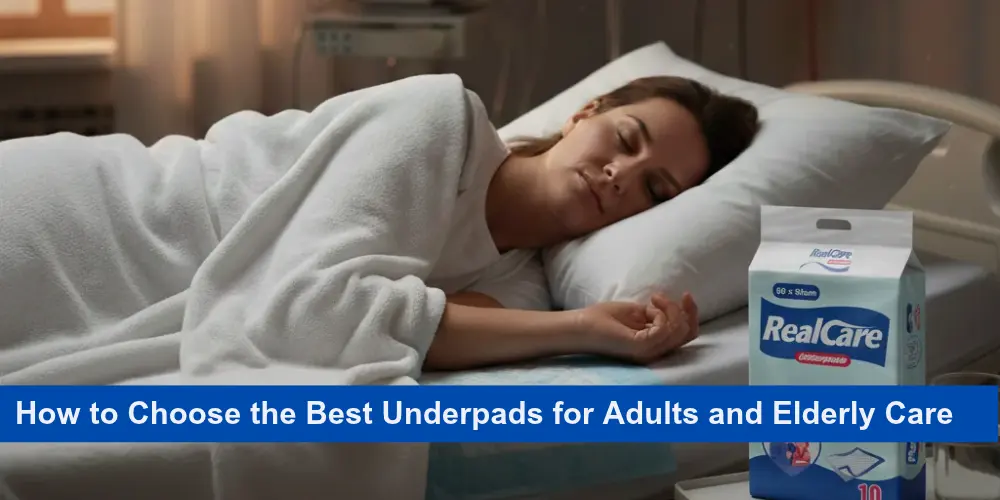
At Realcare, we understand the importance of practical hygiene solutions for adults, elderly individuals, and their caregivers. Realcare underpads are designed for everyday care needs, with product specifications such as a 60 × 90 cm size, a PE backsheet, a latex-free design, and superabsorbent polymer (SAP), according to the product information provided.
In this guide, we will explain how to choose the right adult underpads, explore their advantages and features, and share useful tips for caregivers supporting elderly individuals and adults with incontinence.
What Are Underpads for Adults and Elderly Care?
Underpads, also known as bed pads or protective bed sheets, are absorbent products placed on a bed, chair, wheelchair, or another suitable surface to help manage accidental urine leakage and other moisture.
They are particularly useful for adults and elderly individuals who experience urinary incontinence, have limited mobility, require assistance with personal hygiene, or spend extended periods in bed.
Depending on their design, underpads typically consist of multiple layers that work together to absorb liquid and help protect the surface underneath.
Disposable underpads are commonly used in homes, hospitals, nursing homes, rehabilitation centres, and long-term care settings because they can be discarded after use according to local waste-disposal guidance.
Who Can Benefit from the Best Underpads for Adults and Elderly Care?
Adult underpads can be useful for several care situations.
- Elderly individuals: Helps manage accidental urine leakage and maintain cleaner bedding.
- Adults with urinary incontinence: Provides an additional layer of protection for beds and chairs.
- People with limited mobility: Can simplify hygiene management for individuals who need assistance changing position or accessing a bathroom.
- Bedridden patients: Helps caregivers manage moisture during prolonged bed rest.
- Postoperative patients: May provide convenient surface protection during recovery, depending on their care requirements.
- Caregivers and nursing staff: Can reduce the need to clean entire mattresses or change all the bedding after minor leaks.
Underpads support personal hygiene, but they do not replace regular skin care, appropriate incontinence products, or scheduled assistance with toileting.
Why Choosing the Best Underpads for Adults and Elderly Care Matters
Selecting a suitable underpad is important because not every product provides the same level of absorbency, size, surface comfort, or moisture protection.
An underpad that is too small may not cover the required area. A product with insufficient absorbency may become saturated quickly, while unsuitable backing material may allow moisture to reach the mattress or chair.
The Best Underpads for Adults and Elderly Care should match the individual’s needs, the surface being protected, and the amount of moisture expected.
Here are some important reasons to choose carefully:
| Factor | Why it matters |
| Absorbency | Helps manage the expected amount of urine or moisture. |
| Size | Determines how much of the bed or seating surface is covered. |
| Waterproof backing | Helps prevent absorbed liquid from reaching the surface underneath. |
| Top-sheet comfort | Influences how the product feels against the skin. |
| Product stability | Helps keep the underpad in position during use. |
| Intended use | Determines whether the product is appropriate for a bed, chair, or other surface. |
| Ease of disposal | Helps caregivers manage used disposable pads hygienically. |
Choosing the right product can make daily care more convenient while helping caregivers maintain a clean environment for the person receiving care.
Best Underpads for Adults and Elderly Care: Important Features to Look For
Before buying underpads, caregivers should understand the main product features and how they contribute to everyday use.
1. Superabsorbent Polymer (SAP) for Moisture Absorption
Superabsorbent polymer, commonly called SAP, is a material used in many absorbent hygiene products. It can absorb liquid and retain it within the absorbent core.
Underpads containing SAP may help manage urine and reduce the amount of free liquid remaining on the surface. Actual performance depends on the product’s construction, absorbent capacity, and the quantity of liquid released.
Realcare feature: Realcare underpads are described as containing SAP, which supports their intended use for moisture absorption. Check the product packaging for specific absorbency information.
2. PE Backsheet for Surface Protection
A polyethylene (PE) backsheet is a moisture-resistant layer used in many disposable underpads.
Its purpose is to help prevent liquid from passing through the bottom of the product and reaching the mattress, bed linen, or chair beneath it.
Realcare feature: Realcare underpads feature a PE backsheet according to the supplied product specifications. For the best results, place the underpad correctly and replace it when it becomes saturated or soiled.
3. 60 × 90 cm Size for Bed and Surface Coverage
The size of an underpad affects how much of the surface it can cover. A larger pad may be useful for protecting a wider area, while a smaller pad may be suitable for chairs or more localised protection.
Realcare feature: The Realcare underpad specification provided for this guide is 60 × 90 cm.
This size can be useful for placing under the hips and pelvic area of an adult, depending on body size, sleeping position, and the surface being protected. Caregivers should check that the pad covers the area most likely to become wet.
4. Latex-Free Design for Product Suitability
Some individuals have sensitivities or allergies to natural rubber latex. A latex-free product may be a suitable option for people who need to avoid latex in the product’s materials.
Realcare feature: The supplied Realcare underpad specifications describe a latex-free design. However, a latex-free label does not guarantee that a product will be suitable for every sensitive skin type.
If the person receiving care has a history of skin allergies, check the full material information and monitor for irritation.
5. A Comfortable Top Surface
The top layer of an underpad is the part that comes into contact with the person’s skin or clothing.
A suitable top sheet should be comfortable for its intended use and allow liquid to pass into the absorbent layers. Caregivers should also check the person’s skin regularly, especially if the individual spends long periods in bed.
Do not assume that every underpad keeps the skin completely dry. Replace wet or soiled pads promptly and follow an appropriate skin-care routine.
6. Convenient Disposable Use
Disposable underpads can be helpful for caregivers who need a convenient way to manage moisture and maintain surface hygiene.
After use, the pad can be removed and discarded according to the manufacturer’s instructions and local waste-management guidance. This can reduce the need to wash reusable bed pads, although it does not eliminate the need to clean the person or the surrounding area when necessary.
Advantages of Using the Best Underpads for Adults and Elderly Care
Underpads can make daily personal care more manageable for both the person receiving care and the caregiver.
1. Helps Protect Beds and Mattresses
Accidental urine leakage can soak into bed linen and mattresses, making cleaning difficult. A suitable underpad provides a protective layer between the person and the surface underneath.
The absorbent core helps collect liquid, while a moisture-resistant backing helps reduce the risk of liquid reaching the mattress.
2. Supports Better Hygiene Management
Underpads help caregivers manage accidental leaks and maintain cleaner bedding and seating surfaces.
Replacing a used disposable underpad when needed can make it easier to keep the immediate care environment clean. However, the person’s skin must still be cleaned gently after incontinence episodes.
3. Makes Daily Care More Convenient
Changing a protective underpad may be simpler than removing and replacing all the bed linen after a small leak.
This can be particularly helpful when caring for people who have difficulty turning, sitting up, or moving independently.
4. Useful for Bedridden Individuals
People who remain in bed for extended periods may need additional assistance with incontinence management.
Underpads can provide localised surface protection, helping caregivers manage moisture during personal care, rest, or overnight routines.
They should be used alongside regular repositioning when appropriate, skin inspections, and other pressure-injury prevention measures recommended by healthcare professionals.
5. Provides an Additional Layer of Protection
Underpads can be used alongside adult diapers or other appropriate incontinence products to help protect bedding and furniture.
For example, an adult diaper may manage urine close to the body, while an underpad provides an additional layer of surface protection. Neither product should be treated as a guarantee against all leakage.
6. Helpful in Home Care and Healthcare Settings
Underpads can be used in bedrooms, care facilities, nursing homes, and suitable clinical settings.
They can also be useful during personal care procedures or when managing temporary hygiene needs, provided the product is suitable for the intended application.
7. Supports Dignity During Personal Care
Accidental leakage can be uncomfortable or embarrassing for some adults and elderly individuals.
Using suitable incontinence products, explaining care steps respectfully, and changing wet pads promptly can help support privacy, comfort, and dignity.
How to Choose the Best Underpads for Adults and Elderly Care
Selecting the right underpad involves considering more than the price or brand. The product should suit the individual’s needs, expected moisture level, and daily care routine.
Step 1: Assess the Level of Incontinence
Consider how much urine the person typically passes during the period when the underpad will be used.
- Occasional leakage: A standard underpad may provide sufficient surface protection.
- Moderate leakage: Look for an underpad with suitable absorbency and adequate coverage.
- Frequent or heavier leakage: Consider a higher-capacity product and review the person’s overall incontinence management plan with a healthcare professional if necessary.
Absorbency varies by product, so check the manufacturer’s specifications instead of relying on the pad’s appearance alone.
Step 2: Select the Appropriate Size
Choose a size that covers the surface most likely to become wet.
A 60 × 90 cm underpad may suit many bed-care situations, but body size, movement, sleeping position, and bed dimensions can affect whether it provides adequate coverage.
If the pad does not cover the required area, a larger product or a different placement strategy may be more suitable.
Step 3: Check the Absorbent Core
Look for clear information about the absorbent materials and the product’s intended use.
SAP is commonly used in disposable absorbent products, but the presence of SAP alone does not establish the product’s total absorption capacity or how much liquid it can retain under real-world conditions.
Choose an underpad that is appropriate for the individual’s needs and replace it when required.
Step 4: Look for a Moisture-Resistant Backing
A PE backsheet or another suitable waterproof backing can help prevent liquid from reaching the mattress or chair.
The backing should be positioned correctly, with the absorbent side facing upwards and the protective backing facing the surface being protected.
Step 5: Consider Skin Sensitivity and Comfort
If the individual has sensitive skin, check the product materials and monitor for irritation.
Avoid leaving wet or soiled underpads in contact with the skin for prolonged periods. Use appropriate cleansing and skin-protection products when recommended by a healthcare professional.
Step 6: Choose a Product That Fits the Care Routine
Consider how frequently the pad will need to be replaced, how easy it is to position, and whether the caregiver can change it safely.
For disposable underpads, convenient disposal is an important consideration. For reusable alternatives, washing and drying requirements should be considered.
Caregiver Tips: How to Use Underpads for Adults and Elderly Care
Caregivers play an important role in helping adults and elderly individuals maintain hygiene, comfort, and dignity. Using underpads correctly can make personal care more efficient and help protect bedding and furniture.
1. Prepare the Bed or Chair Before Use
Before positioning the underpad, ensure that the bed or seating surface is clean and dry.
Gather any additional supplies needed for personal care, such as clean underwear, adult diapers, gloves when appropriate, cleansing materials, and disposal bags.
Preparing these items in advance can reduce unnecessary movement and make care more organised.
2. Position the Underpad Correctly
Place the underpad with its absorbent surface facing upwards and the moisture-resistant backing facing downwards.
For bed use, position it beneath the area most likely to become wet, commonly around the hips and pelvic area. Ensure that the pad lies flat and covers the intended area.
Avoid bunching or folding the pad underneath the person, as this may create discomfort or pressure points.
3. Change the Underpad When Needed
Check the underpad regularly and replace it whenever it becomes wet, soiled, saturated, or damaged.
Do not wait until liquid has passed through the pad. The required changing frequency depends on the person’s needs and the product’s absorbency.
A clean underpad should be used whenever necessary to maintain a hygienic care environment.
4. Clean and Dry the Skin Gently
When leakage occurs, help the individual clean the affected skin using a suitable gentle cleansing method.
Pat the skin dry instead of rubbing vigorously. If the person is prone to moisture-associated skin damage, ask a healthcare professional about an appropriate barrier cream or skin-protection routine.
Underpads protect surfaces; they do not replace personal hygiene.
5. Check the Skin Regularly
People with limited mobility may be at increased risk of pressure injuries and moisture-associated skin damage.
During routine care, look for persistent redness, broken skin, pain, swelling, or other changes. Seek healthcare advice if concerns develop.
Underpads should not be used as a substitute for appropriate repositioning, pressure-relieving equipment, or clinical skin-care recommendations.
6. Maintain the Person’s Privacy and Dignity
Explain what you are doing before assisting with personal care. Keep the person covered as much as possible and involve them in decisions whenever they can participate.
Use respectful language and allow the individual to complete any care steps they can safely manage independently.
7. Dispose of Used Underpads Hygienically
Roll or fold the used underpad inward to contain the soiled surface, avoiding contact with the absorbent area.
Dispose of it according to the manufacturer’s instructions and local waste-management guidance. Do not flush disposable underpads down the toilet.
Remove gloves if worn and wash your hands after handling used products.
8. Keep a Supply of Underpads Available
For individuals who require regular assistance, keeping a suitable supply of underpads can help prevent interruptions to the care routine.
Store unused products in a clean, dry place and follow the package’s storage instructions.
9. Combine Underpads With Appropriate Incontinence Care
Underpads work best as part of a broader care plan that may include scheduled toileting, suitable adult diapers, prompt changing, gentle skin cleansing, and adequate fluid intake.
Do not unnecessarily restrict water intake to reduce urinary leakage. If incontinence is new, worsening, or associated with pain or other symptoms, seek medical advice.
Underpads vs. Adult Diapers: What Is the Difference?
Underpads and adult diapers are both used in incontinence care, but they serve different purposes.
| Feature | Underpads | Adult diapers |
| Primary purpose | Helps protect beds, chairs, and other surfaces from moisture. | Worn on the body to collect urine and, depending on the product, faecal matter. |
| Placement | Under the person or on a suitable surface. | Around the waist or hips, or like underwear, depending on the design. |
| Skin contact | The top surface may contact the body or clothing. | The product is in direct contact with the body. |
| Changing | Replaced when wet, soiled, saturated, or damaged. | Changed according to the product instructions and individual care needs. |
| Best use | Additional surface protection. | Primary wearable incontinence management. |
For some individuals, using an adult diaper and an underpad together provides a useful combination of wearable and surface protection.
The choice depends on the individual’s mobility, continence needs, skin condition, and care plan.
Why Choose Realcare Underpads for Adult and Elderly Care?
Realcare underpads can be considered by caregivers looking for a disposable absorbent product for everyday surface protection.
Based on the product information provided for this article, the relevant features include:
- 60 × 90 cm size: Offers coverage for suitable bed and seating applications.
- SAP absorbent material: Helps absorb and retain liquid within the absorbent core.
- PE backsheet: Helps prevent liquid from passing through to the protected surface.
- Latex-free design: May suit people who need to avoid latex in the product’s materials.
- Disposable convenience: Helps simplify underpad replacement and disposal during daily care.
These features can be useful for home caregivers, elderly care routines, and suitable healthcare settings.
When selecting Realcare underpads, review the current packaging for the complete product specifications, pack quantity, intended use, and instructions. Actual performance depends on the product design and the amount of moisture involved.
Choosing the Best Underpads for Adults and Elderly Care means selecting a product that meets the person’s needs while supporting a practical, respectful, and consistent hygiene routine.
Frequently Asked Questions About the Best Underpads for Adults and Elderly Care
1. What are underpads used for in adult care?
Underpads are absorbent products placed on beds, chairs, or other suitable surfaces to help manage accidental urine leakage and protect the surface underneath. They are commonly used in home care, elderly care, and healthcare settings.
2. Which are the Best Underpads for Adults and Elderly Care?
The best underpad depends on the individual’s needs. Consider absorbency, size, backing material, top-sheet comfort, skin sensitivity, and intended use. Realcare underpads, with the specified 60 × 90 cm size, SAP, PE backsheet, and latex-free design, may be considered when these characteristics suit the care situation.
3. What size underpad should I choose for an elderly person?
Choose a size that covers the area most likely to become wet. A 60 × 90 cm underpad may suit many bed-care situations, but body size, sleeping position, and movement should be considered when determining adequate coverage.
4. What is SAP in an underpad?
SAP stands for superabsorbent polymer. It is a material used in absorbent hygiene products to absorb liquid and help retain it within the absorbent core. The performance of an underpad depends on its overall construction and stated absorbency.
5. What is the purpose of the PE backsheet?
A polyethylene backsheet helps prevent liquid from passing through the bottom of an underpad and reaching the mattress, bedding, or seating surface.
6. How often should an underpad be changed?
Change an underpad whenever it becomes wet, soiled, saturated, or damaged. Check it regularly and follow the manufacturer’s instructions. Prompt replacement is especially important when the product is in contact with the person’s skin.
7. Can underpads be used with adult diapers?
Yes. Underpads can provide additional surface protection when used with adult diapers. The diaper collects moisture close to the body, while the underpad helps protect the bed or chair if leakage occurs.
8. Are disposable underpads suitable for bedridden patients?
They can be useful for managing moisture and protecting bedding. However, bedridden individuals also need appropriate skin care, regular assessment, and repositioning or pressure-relieving measures as recommended by healthcare professionals.
9. Are Realcare underpads waterproof?
The Realcare underpad specifications provided for this article include a PE backsheet, which is designed to help resist liquid penetration. However, no underpad should be assumed to prevent all leakage in every situation. Correct placement, suitable coverage, and timely replacement are important.
10. Can underpads prevent pressure sores?
No. Underpads are intended primarily for moisture and surface protection. They do not prevent pressure injuries on their own. People with limited mobility may need regular repositioning, pressure-relieving equipment, and professional skin-care guidance.
11. Are underpads suitable for people with sensitive skin?
Suitability depends on the person’s skin condition and the product’s materials. A latex-free design may be helpful for people who need to avoid latex, but it does not guarantee that every material will be tolerated. Monitor the skin and seek advice if irritation develops.
12. How should used disposable underpads be discarded?
Fold or roll the used underpad inward, avoiding contact with the soiled surface, and dispose of it according to the manufacturer’s instructions and local waste-management guidance. Never flush disposable underpads down the toilet.
13. Can underpads be used on wheelchairs and chairs?
Yes, if the product is suitable for that surface and can be positioned safely. Ensure the underpad lies flat and does not create folds or interfere with safe seating. For wheelchair use, make sure the pad does not compromise stability or the fit of any prescribed seating equipment.
14. Where can caregivers use Realcare underpads?
Depending on the product instructions, underpads may be suitable for beds and other surfaces requiring moisture protection. Check the current Realcare packaging to confirm the intended applications before use.
Conclusion
Choosing the right underpad is an important part of maintaining hygiene, comfort, and dignity during adult and elderly care. A suitable underpad helps manage accidental leakage, protect bedding and furniture, and simplify daily caregiving tasks.
When choosing the Best Underpads for Adults and Elderly Care, consider absorbency, size, moisture-resistant backing, skin suitability, and ease of use. Caregivers should also remember that underpads are only one part of effective incontinence management. Prompt changing, gentle skin cleansing, regular skin checks, appropriate toileting assistance, and respectful personal care remain essential.
Realcare underpads, with their specified 60 × 90 cm size, SAP absorbent material, PE backsheet, and latex-free design, offer features worth considering for suitable everyday care needs. Always check the product’s current specifications and follow its usage instructions to ensure it is appropriate for the individual and the intended application.
Whether you are caring for an elderly parent at home, assisting an adult with limited mobility, or supporting a patient during recovery, selecting suitable hygiene products can make daily care more manageable.
Realcare — supporting everyday hygiene and comfort with practical care solutions.
