


Urinary incontinence affects millions in India. How common is incontinence in India? Discover its prevalence, causes, and awareness gaps.Despite its prevalence, social stigma and lack of awareness prevent many from seeking proper care and treatment.
This comprehensive guide explores the urinary incontinence prevalence in India, key statistics, causes, and the current state of awareness and treatment.
Understanding Urinary Incontinence
Urinary incontinence refers to the involuntary leakage of urine, which can occur due to weakened bladder control or underlying medical conditions. It can affect individuals of all ages, though it is more common among women and the elderly.
Types of Urinary Incontinence
- Stress Incontinence – Leakage during physical activities like coughing or lifting
- Urge Incontinence – Sudden, intense urge to urinate
- Overflow Incontinence – Frequent or constant dribbling
- Functional Incontinence – Due to physical or mental limitations
Urinary Incontinence Prevalence in India
Understanding how common is incontinence in india and how many people suffer requires examining multiple studies and healthcare reports. While exact numbers vary, research consistently shows that incontinence is a significant public health concern.
Incontinence Statistics in India
| Category | Estimated Prevalence |
| Women (General) | 10% – 45% |
| Elderly Population | 30% – 50% |
| Postpartum Women | 15% – 35% |
| Men (General) | 5% – 15% |
These figures highlight that urinary incontinence in India is substantial, especially among women and older adults.
Why Is Incontinence Underreported in India?
Despite the numbers, many cases go unnoticed or untreated. This is primarily due to:
- Social stigma and embarrassment
- Lack of awareness about treatment options
- Misconception that it is a “normal part of aging”
- Limited access to healthcare in rural areas
This underreporting makes it difficult to determine exactly how common is incontinence in India, but experts agree that actual numbers are likely much higher.
Causes of Urinary Incontinence in Indian Adults
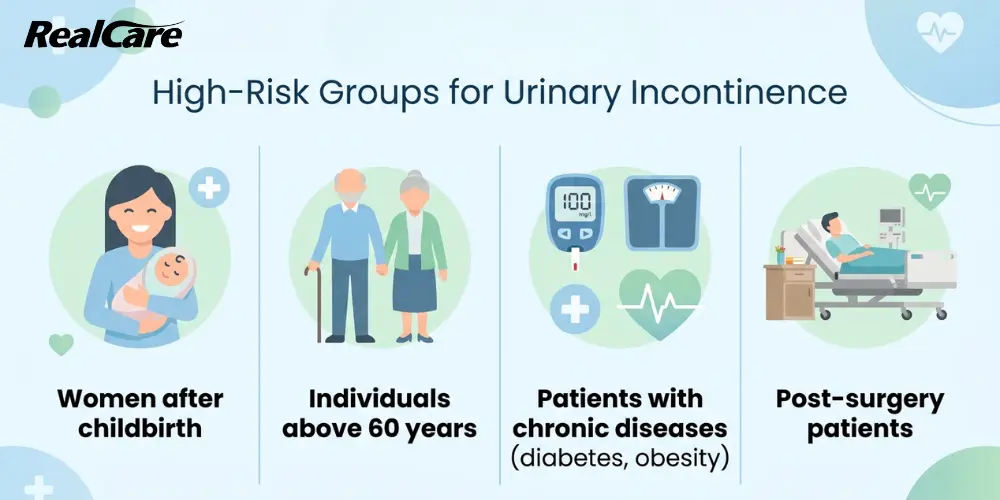
Understanding the causes of urinary incontinence in Indian adults is crucial for prevention and management.
Common Causes
| Cause | Description |
| Pregnancy & Childbirth | Weakens pelvic floor muscles |
| Aging | Reduces bladder elasticity |
| Prostate Issues (Men) | Enlarged prostate affects urine flow |
| Obesity | Adds pressure on bladder |
| Diabetes | Affects nerve control |
| Neurological Disorders | Impairs bladder signals |
| Urinary Tract Infections | Temporary loss of control |
Impact of Incontinence on Daily Life
Incontinence is not just a physical condition—it also affects emotional and social well-being.
Key Challenges
- Reduced confidence and self-esteem
- Social withdrawal and isolation
- Sleep disturbances
- Skin irritation and hygiene issues
Many individuals silently struggle, making incontinence awareness and treatment in India more important than ever.
Incontinence Awareness and Treatment in India
Awareness around incontinence is gradually improving, but significant gaps remain.
Current Awareness Scenario
- Increasing digital health campaigns
- Growing availability of hygiene products
- Rising conversations in urban areas
However, rural regions still face limited awareness and accessibility.
Treatment Options
| Treatment Type | Details |
| Lifestyle Changes | Weight loss, fluid management |
| Pelvic Floor Exercises | Strengthens bladder control |
| Medications | Prescribed for bladder regulation |
| Surgery | For severe cases |
| Absorbent Products | Adult diapers, pads, underpads |
The Role of Hygiene Products in Management
With increasing awareness, many individuals are turning to adult diapers and absorbent products for comfort and confidence.
Benefits of Using Quality Products
- Leak-proof protection
- Odor control
- Skin-friendly materials
- Improved mobility and independence
Brands like RealCare are helping bridge the gap by offering reliable solutions for daily management.
Future Outlook: Addressing the Gap
To better understand incontinence statistics in India and improve patient outcomes, India needs:
- Stronger public health campaigns
- Increased accessibility to treatment
- Education on early symptoms
- Reduction of stigma through open discussions
Frequently Asked Questions (FAQs)
1. How common is incontinence in India?
Incontinence affects a significant portion of the population, with estimates suggesting 10%–45% of women and up to 50% of elderly individuals experience some form of it.
2. How many people suffer from incontinence in India?
While exact numbers are unclear due to underreporting, millions of Indians are affected, especially among aging populations and women.
3. What are the main causes of urinary incontinence in Indian adults?
Common causes include aging, childbirth, prostate issues, obesity, diabetes, and neurological disorders.
4. Is urinary incontinence treatable?
Yes, it can be managed through lifestyle changes, exercises, medications, and supportive products.
5. Why is awareness about incontinence low in India?
Cultural stigma, lack of education, and limited healthcare access contribute to low awareness.
Conclusion
So, how common is incontinence in India? The answer is clear—it is far more widespread than commonly acknowledged. With millions affected and many cases going unreported, there is an urgent need for increased awareness, better healthcare access, and reliable management solutions.
Addressing this issue openly can significantly improve the quality of life for those affected and help eliminate the stigma surrounding it.
Call to Action (CTA)
Don’t let incontinence affect your confidence or daily life. Explore high-quality, comfortable, and reliable solutions with RealCare.
Take the first step toward better hygiene and confidence today.
Visit www.myrealcare.com to discover products designed for your comfort and care.
Disclaimer
The statistics and information provided are for general educational purposes only and are based on various studies that may vary in accuracy. Actual prevalence may differ due to underreporting and regional factors. This content is not a substitute for professional medical advice—please consult a qualified healthcare professional for diagnosis and treatment. RealCare is not liable for any decisions made based on this information.

%2010%%20–%2045%%20Elderly%20Population%2030%%20–%2050%%20Postpartum%20Women%2015%%20–%2035%%20Men%20(General)%205%%20–%2015%%20These%20figures%20highlight%20that%20urinary%20incontinence%20in%20India%20is%20substantial,%20especially%20among%20women%20and%20older%20adults.%20Why%20Is%20Incontinence%20Underreported%20in%20India?%20Despite%20the%20numbers,%20many%20cases%20go%20unnoticed%20or%20untreated.%20This%20is%20primarily%20due%20to:%20This%20underreporting%20makes%20it%20difficult%20to%20determine%20exactly%20how%20common%20is%20incontinence%20in%20India,%20but%20experts%20agree%20that%20actual%20numbers%20are%20likely%20much%20higher.%20Causes%20of%20Urinary%20Incontinence%20in%20Indian%20Adults%20Understanding%20the%20causes%20of%20urinary%20incontinence%20in%20Indian%20adults%20is%20crucial%20for%20prevention%20and%20management.%20Common%20Causes%20Cause%20Description%20Pregnancy%20&%20Childbirth%20Weakens%20pelvic%20floor%20muscles%20Aging%20Reduces%20bladder%20elasticity%20Prostate%20Issues%20(Men)%20Enlarged%20prostate%20affects%20urine%20flow%20Obesity%20Adds%20pressure%20on%20bladder%20Diabetes%20Affects%20nerve%20control%20Neurological%20Disorders%20Impairs%20bladder%20signals%20Urinary%20Tract%20Infections%20Temporary%20loss%20of%20control%20Impact%20of%20Incontinence%20on%20Daily%20Life%20Incontinence%20is%20not%20just%20a%20physical%20condition—it%20also%20affects%20emotional%20and%20social%20well-being.%20Key%20Challenges%20Many%20individuals%20silently%20struggle,%20making%20incontinence%20awareness%20and%20treatment%20in%20India%20more%20important%20than%20ever.%20Incontinence%20Awareness%20and%20Treatment%20in%20India%20Awareness%20around%20incontinence%20is%20gradually%20improving,%20but%20significant%20gaps%20remain.%20Current%20Awareness%20Scenario%20However,%20rural%20regions%20still%20face%20limited%20awareness%20and%20accessibility.%20Treatment%20Options%20Treatment%20Type%20Details%20Lifestyle%20Changes%20Weight%20loss,%20fluid%20management%20Pelvic%20Floor%20Exercises%20Strengthens%20bladder%20control%20Medications%20Prescribed%20for%20bladder%20regulation%20Surgery%20For%20severe%20cases%20Absorbent%20Products%20Adult%20diapers,%20pads,%20underpads%20The%20Role%20of%20Hygiene%20Products%20in%20Management%20With%20increasing%20awareness,%20many%20individuals%20are%20turning%20to%20adult%20diapers%20and%20absorbent%20products%20for%20comfort%20and%20confidence.%20Benefits%20of%20Using%20Quality%20Products%20Brands%20like%20RealCare%20are%20helping%20bridge%20the%20gap%20by%20offering%20reliable%20solutions%20for%20daily%20management.%20Future%20Outlook:%20Addressing%20the%20Gap%20To%20better%20understand%20incontinence%20statistics%20in%20India%20and%20improve%20patient%20outcomes,%20India%20needs:%20Frequently%20Asked%20Questions%20(FAQs)%201.%20How%20common%20is%20incontinence%20in%20India?%20Incontinence%20affects%20a%20significant%20portion%20of%20the%20population,%20with%20estimates%20suggesting%2010%–45%%20of%20women%20and%20up%20to%2050%%20of%20elderly%20individuals%20experience%20some%20form%20of%20it.%202.%20How%20many%20people%20suffer%20from%20incontinence%20in%20India?%20While%20exact%20numbers%20are%20unclear%20due%20to%20underreporting,%20millions%20of%20Indians%20are%20affected,%20especially%20among%20aging%20populations%20and%20women.%203.%20What%20are%20the%20main%20causes%20of%20urinary%20incontinence%20in%20Indian%20adults?%20Common%20causes%20include%20aging,%20childbirth,%20prostate%20issues,%20obesity,%20diabetes,%20and%20neurological%20disorders.%204.%20Is%20urinary%20incontinence%20treatable?%20Yes,%20it%20can%20be%20managed%20through%20lifestyle%20changes,%20exercises,%20medications,%20and%20supportive%20products.%205.%20Why%20is%20awareness%20about%20incontinence%20low%20in%20India?%20Cultural%20stigma,%20lack%20of%20education,%20and%20limited%20healthcare%20access%20contribute%20to%20low%20awareness.%20Conclusion%20So,%20how%20common%20is%20incontinence%20in%20India?%20The%20answer%20is%20clear—it%20is%20far%20more%20widespread%20than%20commonly%20acknowledged.%20With%20millions%20affected%20and%20many%20cases%20going%20unreported,%20there%20is%20an%20urgent%20need%20for%20increased%20awareness,%20better%20healthcare%20access,%20and%20reliable%20management%20solutions.%20Addressing%20this%20issue%20openly%20can%20significantly%20improve%20the%20quality%20of%20life%20for%20those%20affected%20and%20help%20eliminate%20the%20stigma%20surrounding%20it.%20Call%20to%20Action%20(CTA)%20Don’t%20let%20incontinence%20affect%20your%20confidence%20or%20daily%20life.%20Explore%20high-quality,%20comfortable,%20and%20reliable%20solutions%20with%20RealCare.%20Take%20the%20first%20step%20toward%20better%20hygiene%20and%20confidence%20today.Visit%20www.myrealcare.com%20to%20discover%20products%20designed%20for%20your%20comfort%20and%20care.%20Disclaimer%20The%20statistics%20and%20information%20provided%20are%20for%20general%20educational%20purposes%20only%20and%20are%20based%20on%20various%20studies%20that%20may%20vary%20in%20accuracy.%20Actual%20prevalence%20may%20differ%20due%20to%20underreporting%20and%20regional%20factors.%20This%20content%20is%20not%20a%20substitute%20for%20professional%20medical%20advice—please%20consult%20a%20qualified%20healthcare%20professional%20for%20diagnosis%20and%20treatment.%20RealCare%20is%20not%20liable%20for%20any%20decisions%20made%20based%20on%20this%20information.&media=https://myrealcare.com/wp-content/uploads/2026/04/Realcare-Blog-Post-Banner.webp)